文獻筆記・
傳統企業如何經營數位商業生態系
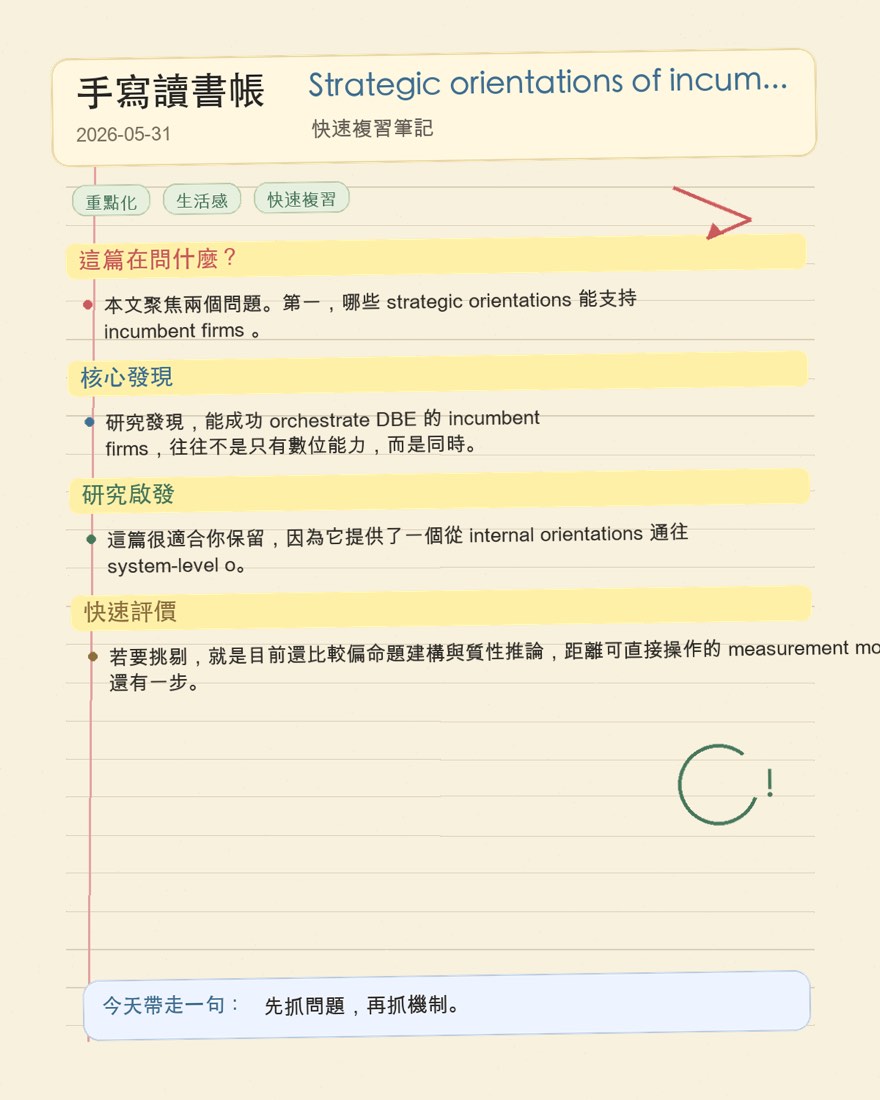
本文聚焦兩個問題。第一,哪些 strategic orientations 能支持 incumbent firms 去 orchestrate digital business ecosystem…
- 論文
- Strategic orientations of incumbent firms and digital business ecosystem orchestration
- 作者
- Samrat Bagchi, Kamal Sharma(2026)
- 期刊
- International Journal of Information Management, 89, 103064
- DOI
- 10.1016/j.ijinfomgt.2026.103064
- 分類
- 管理
1. 基本資訊
這篇文章由 Samrat Bagchi 與 Kamal Sharma 發表於 2026 年的 International Journal of Information Management,題目是〈Strategic orientations of incumbent firms and digital business ecosystem orchestration〉,DOI 為 10.1016/j.ijinfomgt.2026.103064。文章關心的核心問題不是生態系統重要不重要,而是傳統 incumbent firms 為什麼有些能成功成為 orchestrator,有些卻無法把多方夥伴真正結構性對齊。
2. 研究問題
本文聚焦兩個問題。第一,哪些 strategic orientations 能支持 incumbent firms 去 orchestrate digital business ecosystems。第二,在 emerging economies 這種制度不完整、環境又快速變動的場景下,內部因素與外部因素如何共同影響 orchestration。作者真正想補的缺口,是既有研究往往只談 firm-level orientation 或 ecosystem-level governance,卻較少把兩者放在同一個整合框架裡理解。
3. 理論基礎
理論上,本文結合 resource-based view 與 institutional theory。RBV 讓作者把 strategic orientations 理解為一組能支持競爭優勢與跨邊界協調的高階無形資源;institutional theory 則用來解釋為何 emerging economies 中的 institutional voids,反而會促使企業發展更強的集體參與與協調動機。這樣的雙理論組合,讓生態系統協調不只是資源配置問題,也是一個制度填補與環境回應問題。
4. 研究架構
整體架構很清楚。作者主張 entrepreneurial orientation、market orientation、digital orientation 與 collective strategy orientation 會聚合成一個更高階的構念,稱為 ecosystem orientation。這個 ecosystem orientation 會正向推動 DBE orchestration,而 leadership vision 在兩者之間扮演中介角色。另外,environmental dynamism 與 institutional voids 則是外部調節因素,會改變 ecosystem orientation 對 orchestration 的作用強度。
5. 假設邏輯
雖然這篇是偏質性與命題建構型研究,但推論邏輯很完整。作者先認為單一 strategic orientation 不足以支撐複雜的 ecosystem orchestration,因為 orchestrator 不只要懂市場,也要懂數位技術、敢冒險試新模式,還得能採取 collective mindset 去平衡合作與競爭。接著作者再推論,這些導向若被整合成 ecosystem orientation,較能促成系統級協調。而 leadership vision 之所以關鍵,是因為它把內部導向轉譯成對外部夥伴的共享方向與治理行動。最後,在更動盪、更有制度缺口的環境中,這種能力反而更有價值。
6. 方法
研究採 abductive qualitative design,基於 17 份對 practitioners 與 senior executives 的 semi-structured interviews,場景聚焦於 emerging economies,尤其是印度背景下的 DBE orchestration。分析方式是在資料與 RBV、institutional theory 之間反覆對話,從而萃取出 ecosystem orientation 這個高階構念與相關命題。這種方法很適合用來處理多層次、概念尚在形成中的現象。
7. 結果
研究發現,能成功 orchestrate DBE 的 incumbent firms,往往不是只有數位能力,而是同時具備 entrepreneurial、market、digital 與 collective strategy orientations,並把它們整合成 ecosystem orientation。進一步來看,leadership vision 會把這個內部導向轉為對外部夥伴的行動協調與 shared direction。另一個重要發現是,environmental dynamism 與 institutional voids 並不只是阻礙,它們反而會強化企業發展 orchestration capability 的需求與誘因。
8. 理論貢獻
這篇最大的理論貢獻,是提出並具體化 ecosystem orientation 這個構念。第一,它補上了 firm-level strategic orientation 與 system-level ecosystem theory 之間的斷層。第二,它把 orchestration capability 理解為多種導向的聚合,而不是單一能力或單一策略。第三,它把 institutional voids 從單純環境限制轉為能觸發集體行動與制度橋接的條件,這讓 emerging economy 的生態系統研究更有解釋力。
9. 實務意涵
對實務來說,這篇傳達的重點很直接。Incumbent firms 若想從既有企業轉成 ecosystem orchestrator,不能只投資數位工具或平台,而要同步培養跨邊界協作、集體策略與市場感知等多重導向。特別是在制度不完善的市場中,企業往往需要扮演部分制度中介與協調角色,因此領導團隊是否能提出足夠強的 ecosystem vision,會決定合作夥伴能否被真正拉進共同目標。
10. 研究限制
限制主要有幾點。第一,樣本規模不大,且主要集中於 emerging economy 脈絡,因此外推到成熟市場時仍需保留。第二,這篇目前偏理論建構與質性命題,尚未提供大樣本量化驗證。第三,ecosystem orientation 雖然很有啟發,但與 dynamic capability、platform capability 等鄰近概念的邊界還可再釐清。第四,文章較少深入拆解不同類型 ecosystem 或不同數位成熟度下的差異路徑。
11. 對我研究的啟發
這篇很適合我保留,因為它提供了一個從 internal orientations 通往 system-level orchestration 的橋梁模型。我可以把它和之前讀過的 organizational learning、performative AI、distributed governance、knowledge creation 文獻串起來,形成一條 internal orientation / learning -> coordination capability -> ecosystem-level value creation 的路徑。尤其值得重用的是 ecosystem orientation 這個想法,它能幫我把人機協作、平台協作與組織能力研究往更高層次整合。
12. 整體評價
我認為這篇是 backlog 裡相當值得優先讀的一篇,因為它不是單純談數位轉型,而是進一步處理「企業如何成為生態系統協調者」這個更難、更接近實際競爭的問題。文章的強項是概念整合能力強,也清楚把 emerging economy 與 institutional voids 納入解釋。若要挑剔,就是目前還比較偏命題建構與質性推論,距離可直接操作的 measurement model 還有一步;但作為我研究 ecosystem governance、organizational adaptation 與 collective strategy 的橋樑文,我認為很有價值。
這是我的個人閱讀筆記,整理論文重點與心得,內容以原文為準。全文請由 DOI 連結至期刊閱讀。